
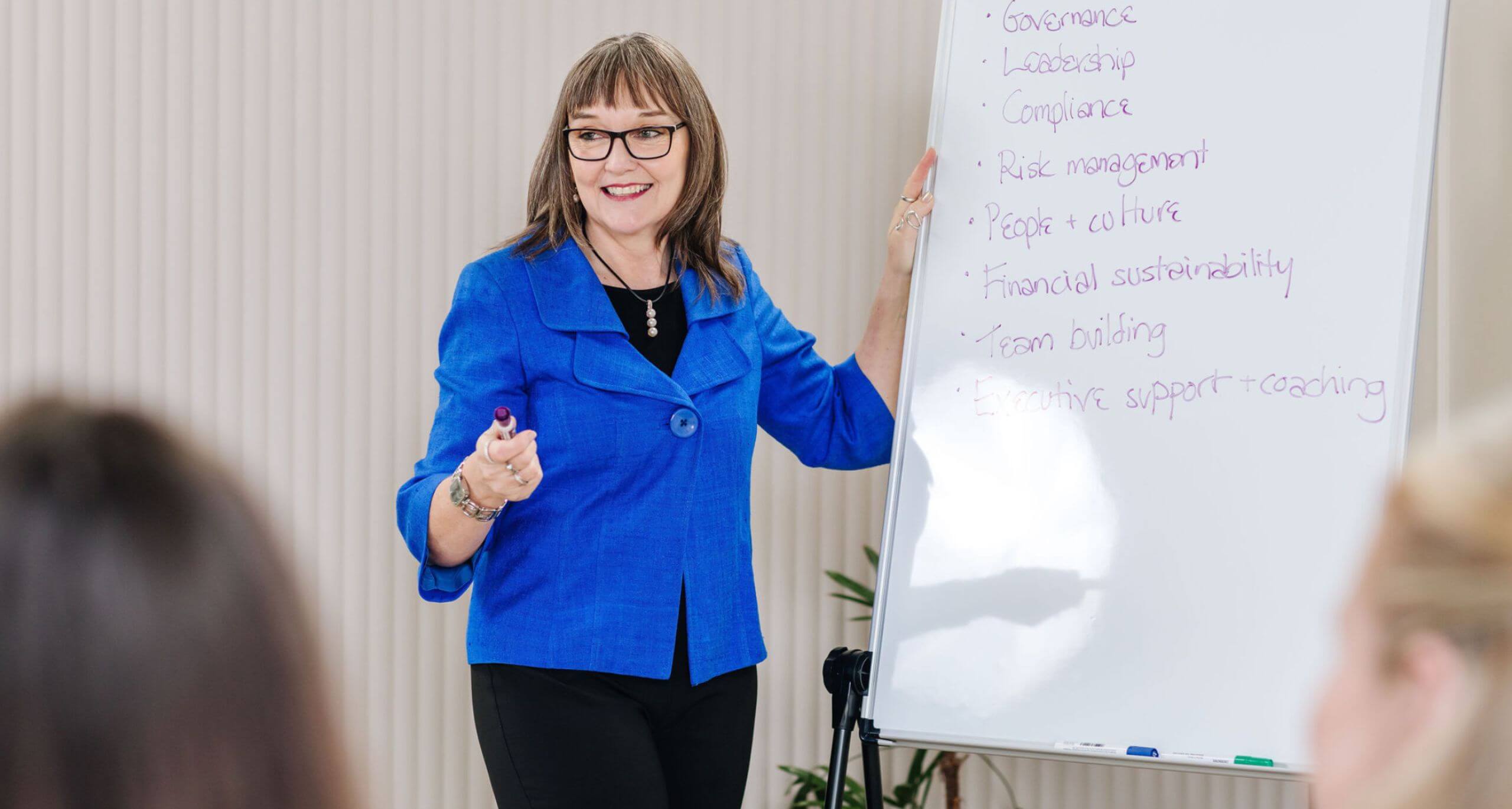
A key part of the governance role of any Board or Management Committee is to set the strategic direction its organisation will take in order to deliver on its Purpose, Vision and Mission.
I know that sounds pretty obvious, yet I have worked with organisations – big and small – that have managed to get themselves into a mess due to a lack of Board leadership in developing their Strategic Plan.
One of the most common causes is the governing body abdicating its responsibility for setting strategy. Sometimes this happens because the Board explicitly expects the CEO to prepare the draft Plan. Other times, a lack of leadership from the Board creates an environment where the poor CEO feels they have no choice but to step into the void and produce the draft themselves.
Either way, the Board needs gently take the reins and drive the process – strategy development is not something the CEO should be leading on behalf of the Board.
So my first recommendation is to ensure your Board has a Sub-committee (or, at an absolute minimum, a portfolio holder) responsible for leading the organisation’s strategy development process on behalf of the Board.
Secondly, ensure there is a cyclic process in place to guide strategic planning.
Preparation is key to good planning, so having this cyclic process documented and led by the Sub-committee or portfolio holder will ensure all the necessary preparation is completed, creating strong foundations for your the rest of the planning process.
Having done your preparation, by the time you come together as a Board (along with your CEO and/or other key people) for your actual planning workshop, much of the thinking work will already have been done. The workshop can then focus on pulling together all the common threads and shaping them into a coherent strategy.
(I have to say, as a facilitator, I find this is one of the most satisfying parts of working with an organisation on its strategy – when people have put the work into the preparation, the workshop flows beautifully and produces much better outcomes!)
The next step is to effectively capture and document the decisions and outcomes from the workshop – this is essential if you want a clear and concise Strategic Plan.
I generally find ‘less is more’ when documenting a Plan – it’s important to include the key information without going overboard on the detail.
You want to end up with a document that gets to the crux of your strategy simply and quickly, so that those reading it stay interested and engaged, and can easily understand what your organisation is seeking to achieve.
Finally, the Board must oversight the implementation of the Plan.
Usually this will involve setting specific Key Performance Indicators (KPIs) related to your Plan for your CEO (or whoever leads your organisation) to deliver.
Once those KPIs are in place, it rests with the Board to keep tabs on their progress and ensure they are achieved.
At the end of the day, the Board must own the strategy, and that is more that just rubber stamping something created by someone else…it means leading the process every step of the way, and owning the input and the outcome from start to finish!
If your Board needs my help with this, do get in touch with me at megan@mjbconsulting.net.au, or book in a zoom chat with me HERE, and let’s talk!
Recent Comments